Workshop : how to study makerspaces ?
“The Metropolis strives to reach a mythical point where the world is completely fabricated by man, so that it absolutely coincides with his desires.”
― Rem Koolhaas
Recently, a specific type of places have sprung up over the globe to host social and technological experiments about fabrication and the act of making. Populated by an eclectic array of people commonly called makers, these makerspaces (e.g. hackerspaces, hacklabs, fablabs, living labs...) combine multiple and sometimes contradictory visions and utopias about new ways of living, producing and inhabiting the world. The current workshop aims at designing methods and tools to study makerspaces, by considering actors, tools, networks, and localized practices or discourses in larger socio-economics and political contexts across multiple sites.
Creative spaces in cities
Studying cities has never been an easy task. Spaces are produced by imaginaries, socio-political settings or technologies while places are entangled in hybrid realities and networks. Since its formulation 25 years ago, the hypothesis of the creative city still remains an important cornerstone of urban design and policies. In a paper called The Anatomy of the Creative City, Cohendet et al identify three layers in this creative city : the upperground with formal institutions (firms, companies, public services, etc), the underground where resides creative, artistic and cultural activities without formal production, exploitation or diffusion and more interestingly the middleground which constitues "a critical intermediate structure linking the underground to the upperground" (ibid).
The idea of middleground has been partly illustrated by the concept of third places, which represents social setups between home and office (cafes, libraries, events, etc). The generic term of makerspaces describes new forms of such third places that dedicate themselves to provide venues to the act of making, in and out the traditional contexts of work and leisure.
Making together and the study of assemblages
What are they? How can these makerspaces be defined? While they first exist as locations, these places are also embedded in larger urban assemblages of spatial, social and political networks. Traditional approaches in social and human sciences (ethnography, statistics, interviews, discourse analysis, etc.) provide little guidance about the conduct of studies on such fragmented and discontinued objects.
Moreover, the passive position of the observer seems to oppose to the active stance of the maker, resulting in possible conflicts in the understanding of makerspaces. What can researchers make? How can makers lead a research about their spaces? How can the collection, record, mapping and visualization of information become the product of a common study? What should the study of making look like?
The Workshop
The workshop "How to study makerspaces?" took place on the 18th and 19th May, 2017 in Renens, Switzerland. During two days, we were hosted at Les Ateliers de Renens, an old printing factory repurposed into a creative cluster hosting a makerspace, a fablab, a bio-hacklab, a coworking space and many other initiatives.
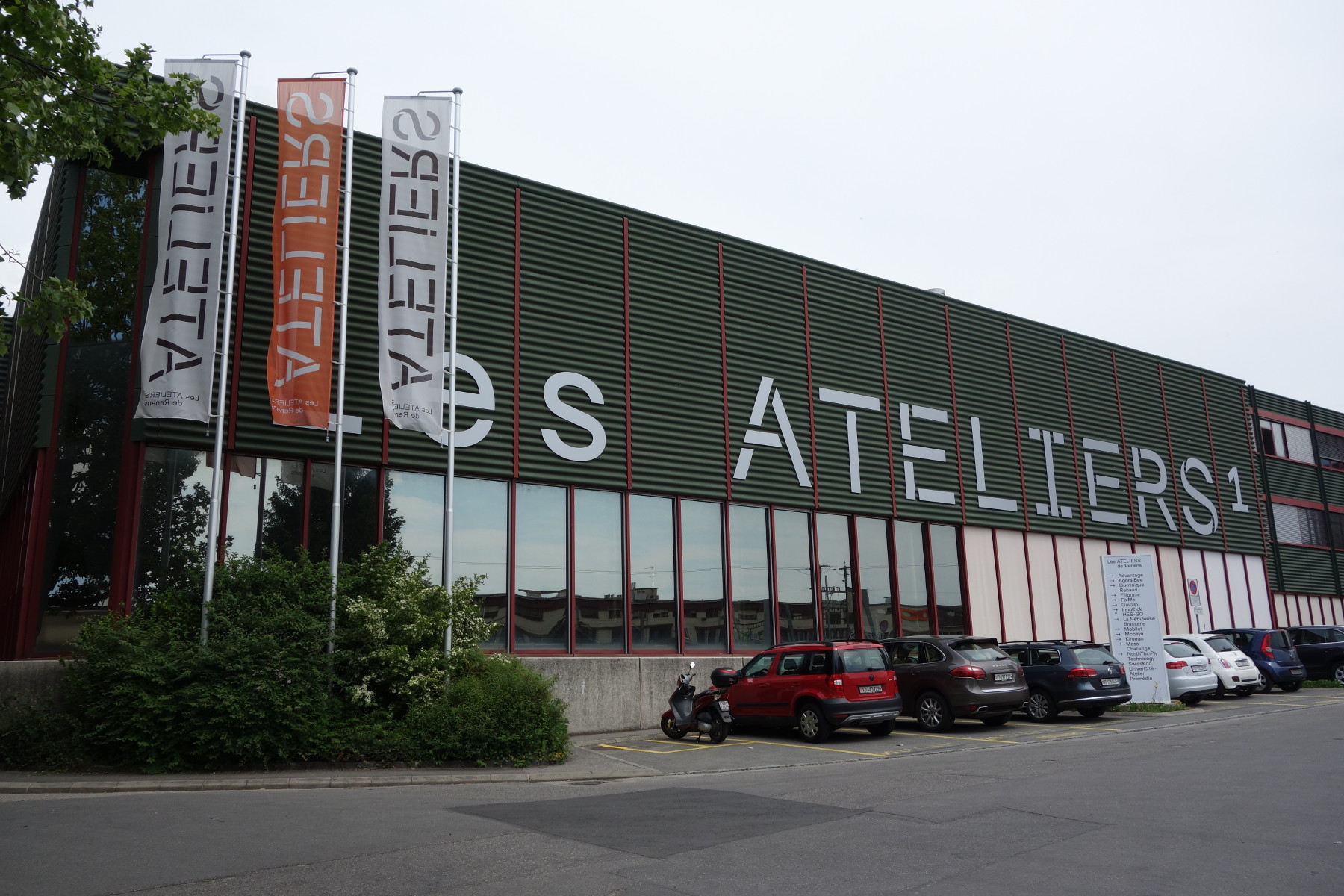 Les Ateliers de Renens regroups a makerspaces, a hackerspace, a coworking space, a restaurant, and much more -- photo : Nicolas Nova (cc)
It brought together 15 makers and practitioners from different background and disciplines to design new methods, processes, protocols or tools that can support the study of makerspaces. Architects, designers, sociologists, makers, and much more exchanged and discussed about their different practices of research. There weren’t any formal presentations. We divided our time in short work sessions of discussions, field exploration, on-hands prototyping or online/offline experiments. At the end of the workshop, the results were presented during a small public event of restitution.
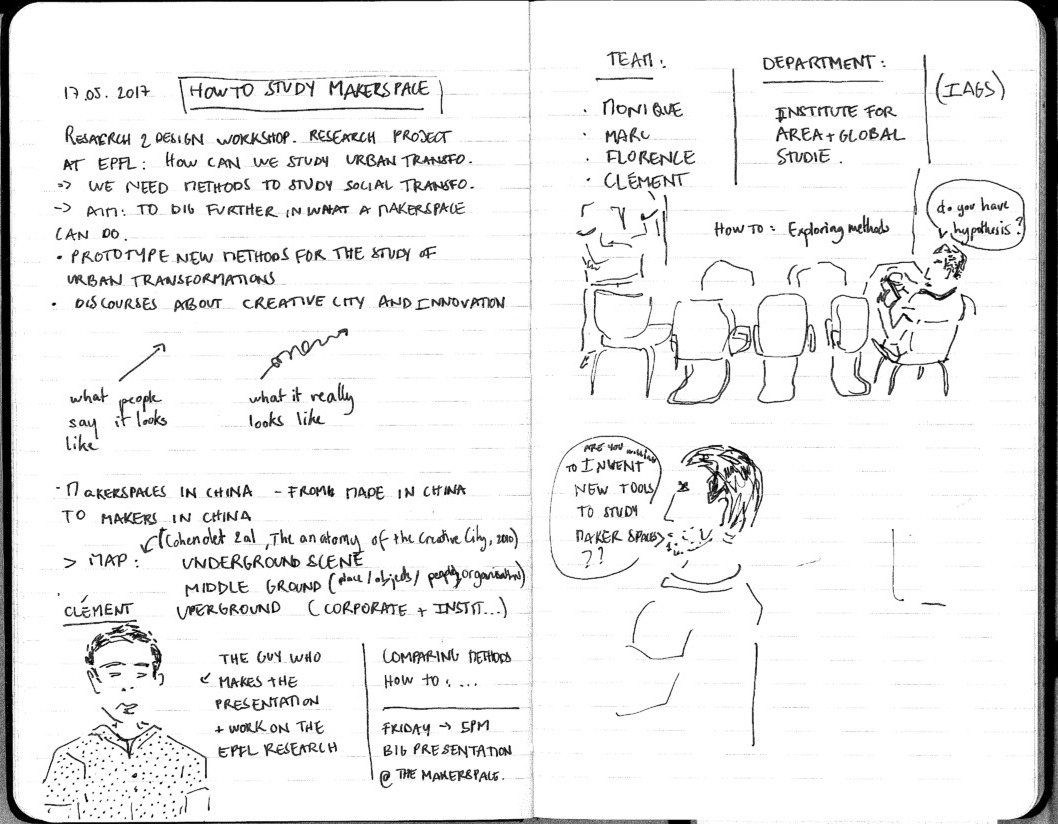
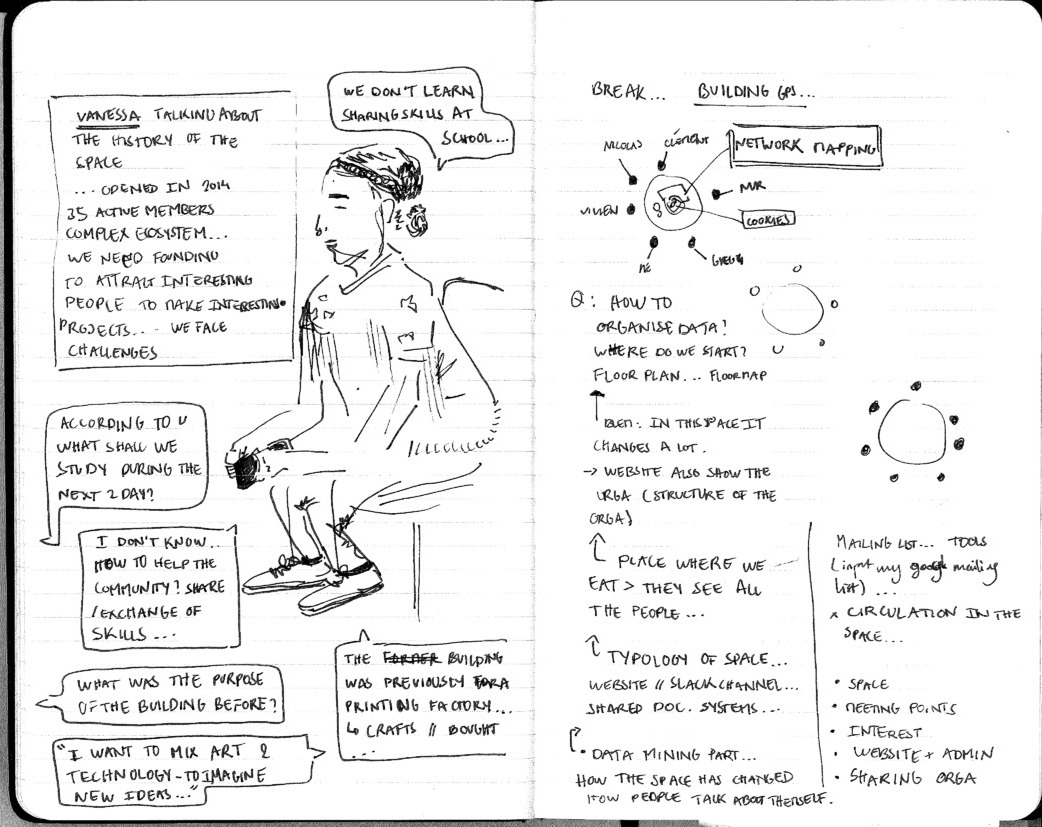
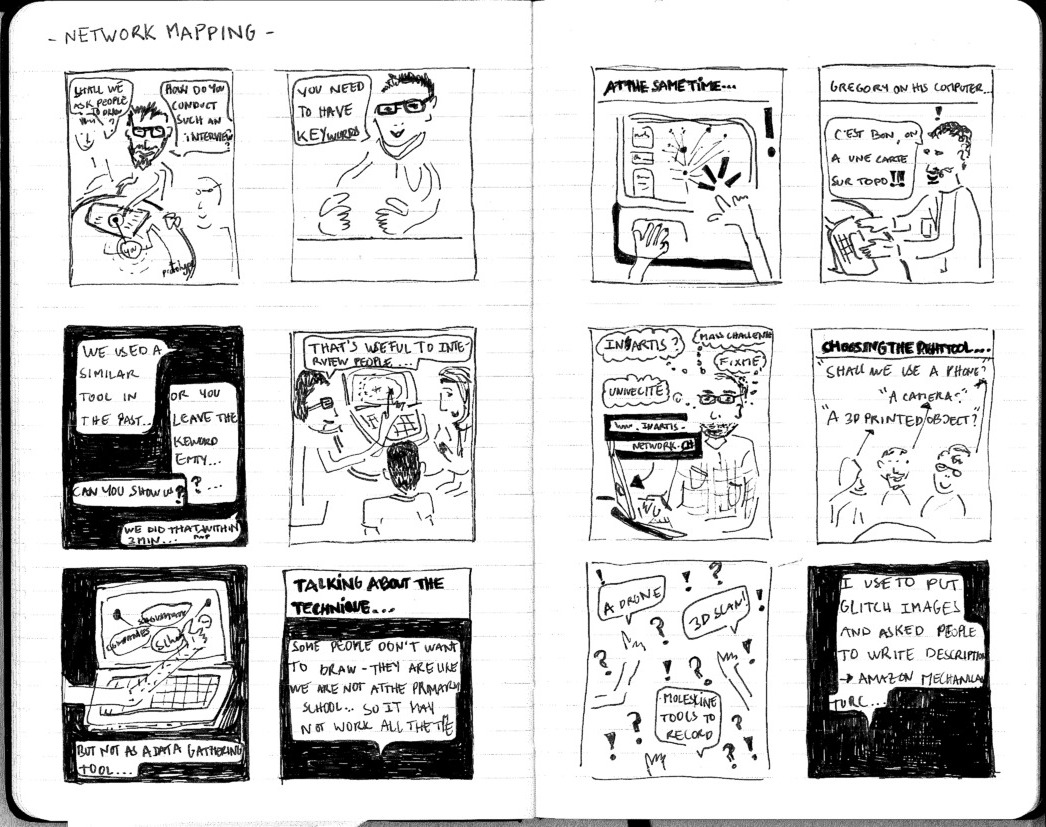
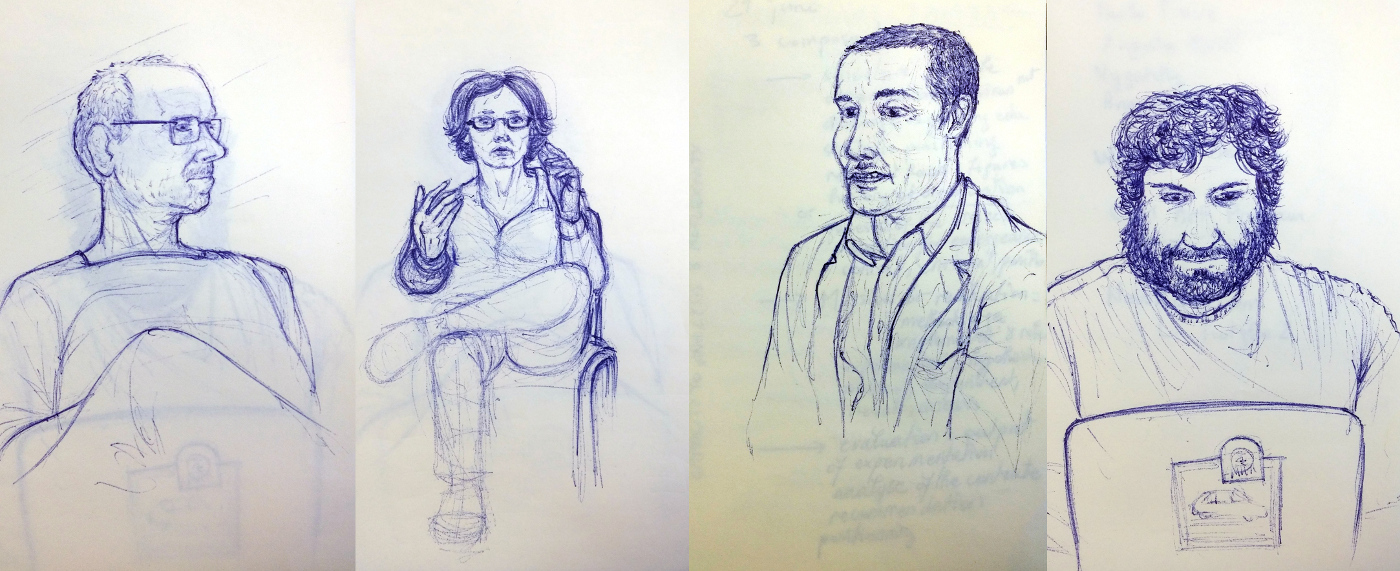 15 participants and several interviewees took part in this workshop --
drawings : Vivien Roussel (cc)
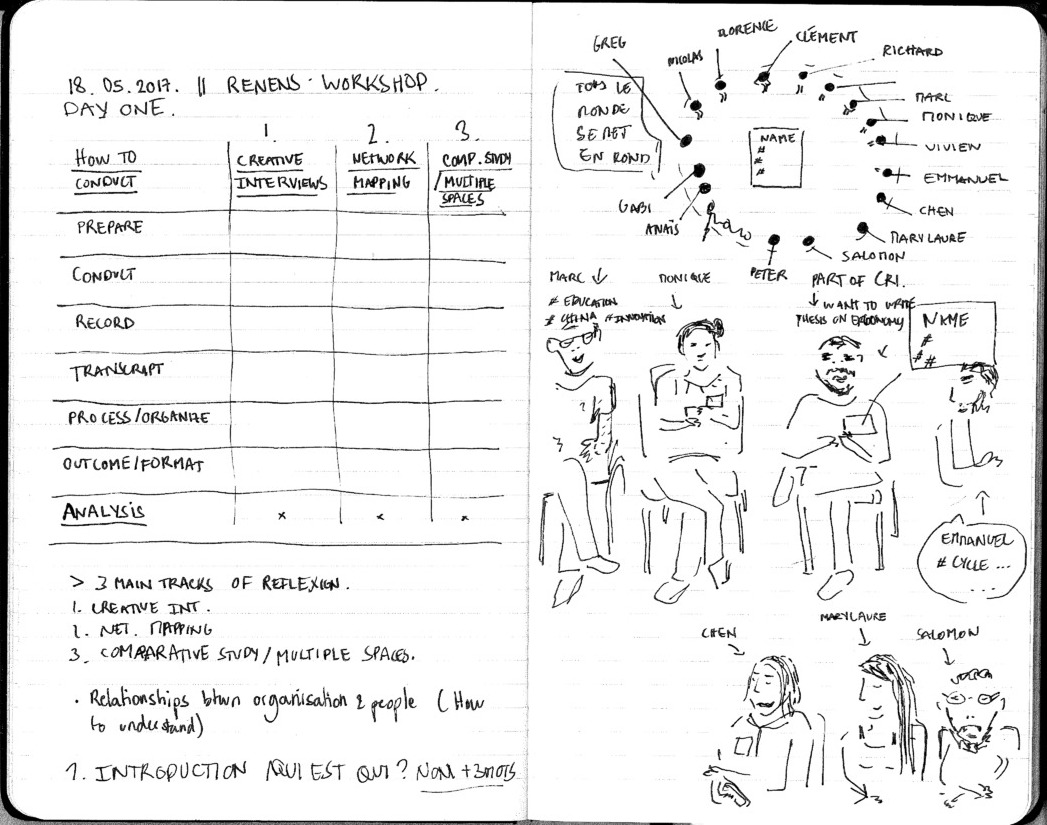
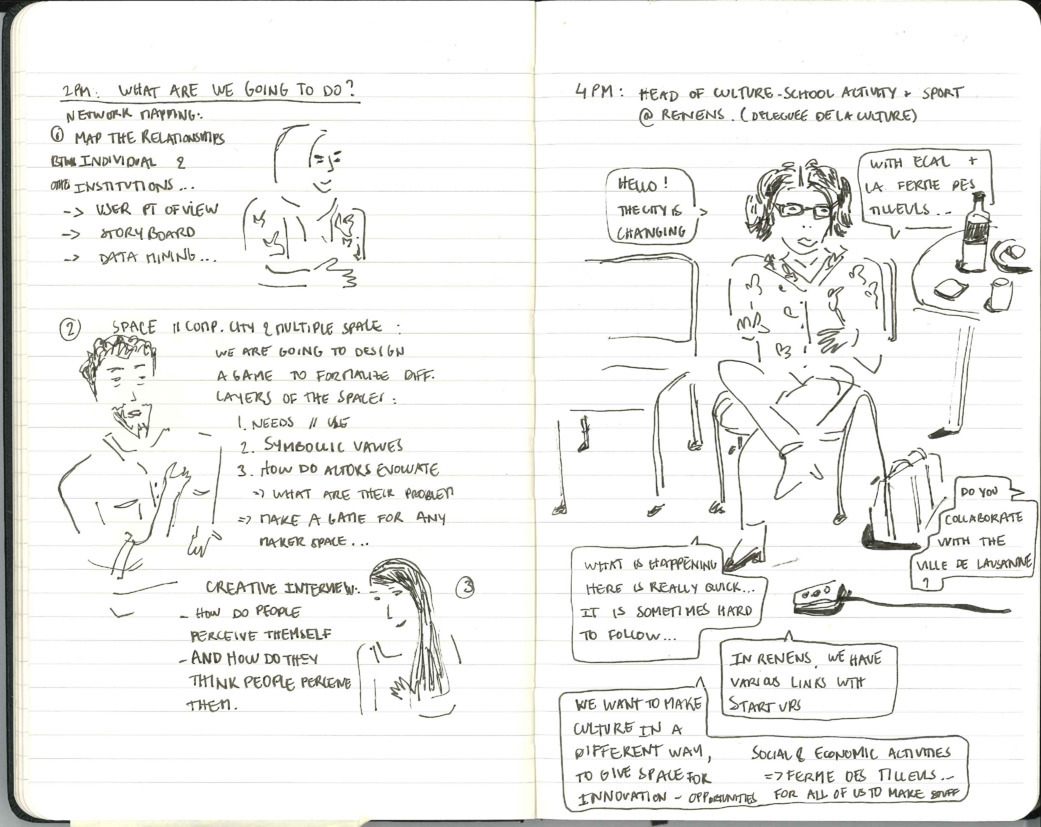
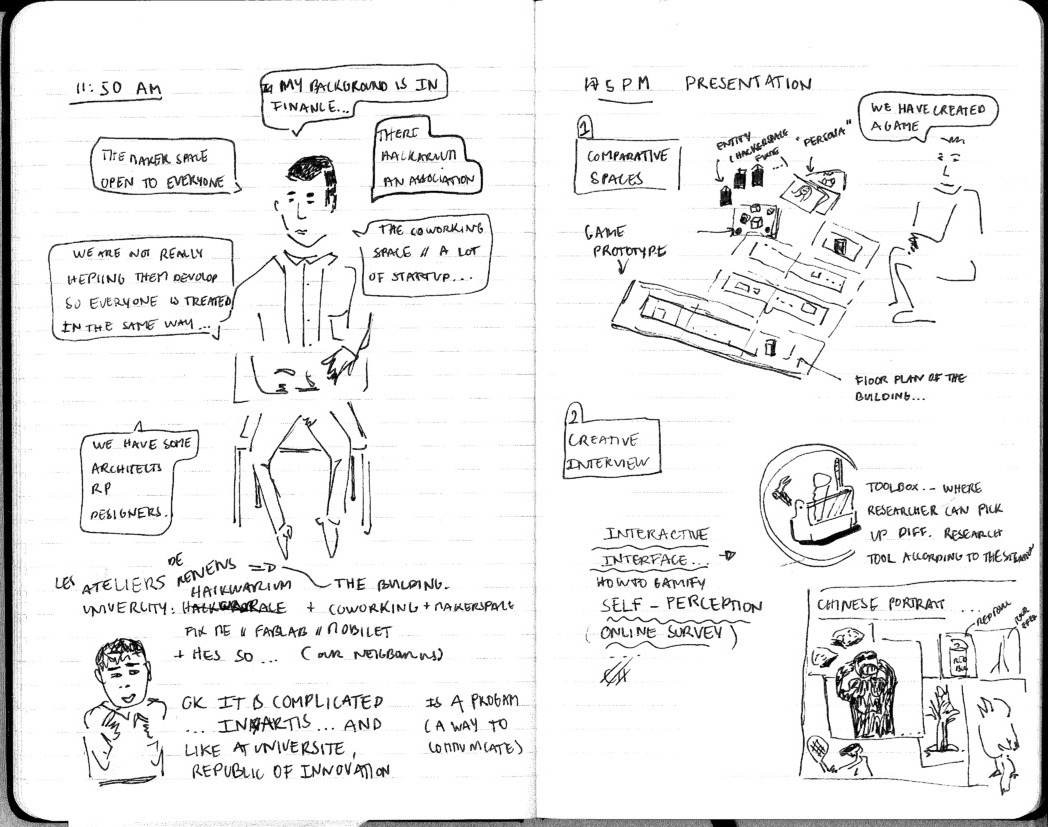
15 participants and several interviewees took part in this workshop --
drawings : Vivien Roussel (cc)
We experimented with new ways to observe, record and map activities, changes, discourses and stakes that surround the space. We tested together methods that can be reused to draw portraits of similar places in different contexts.
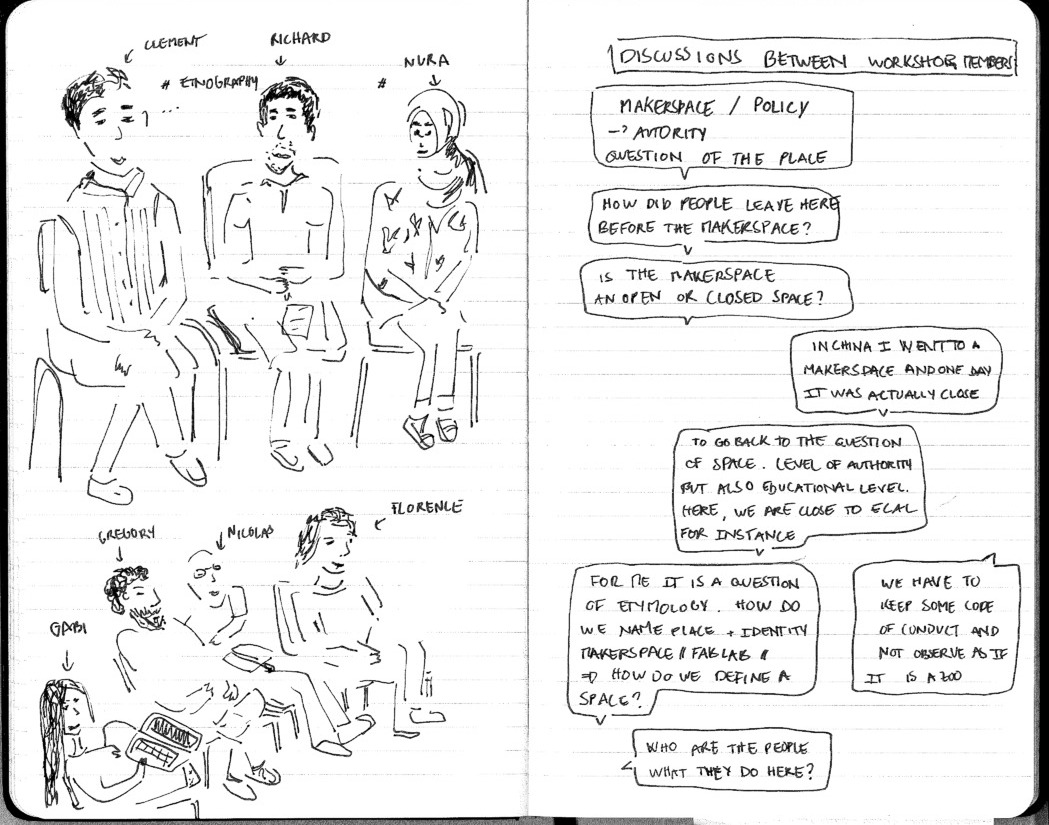
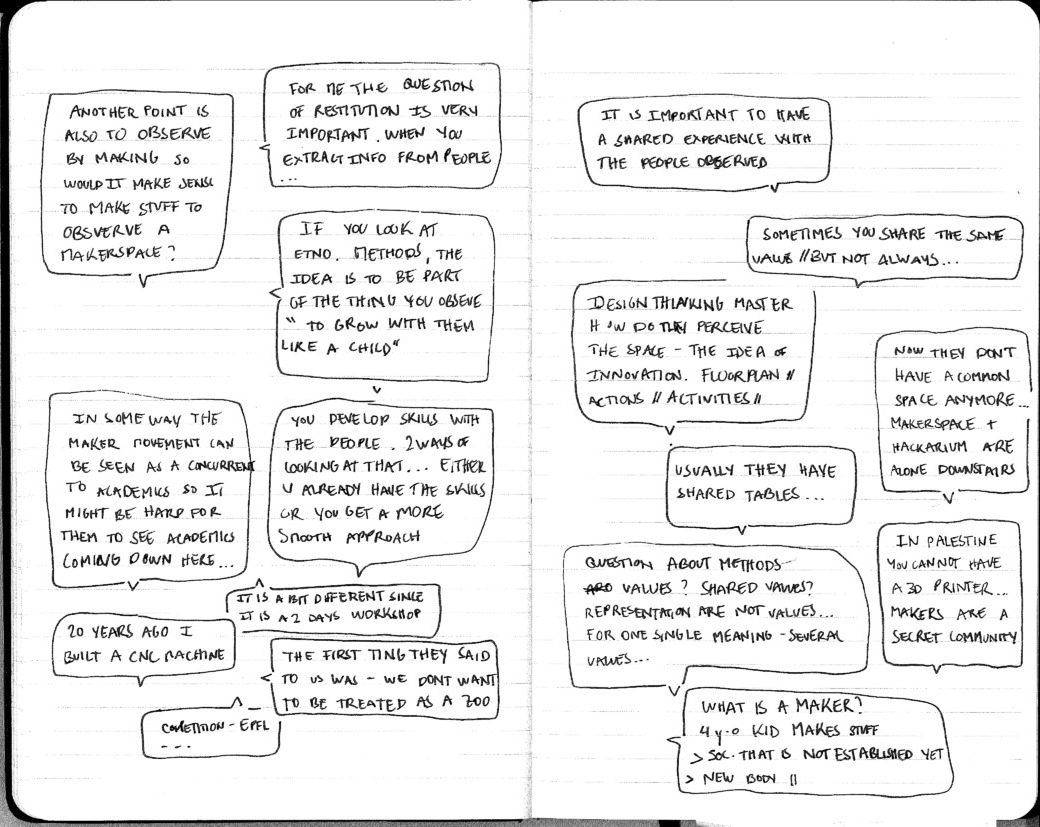
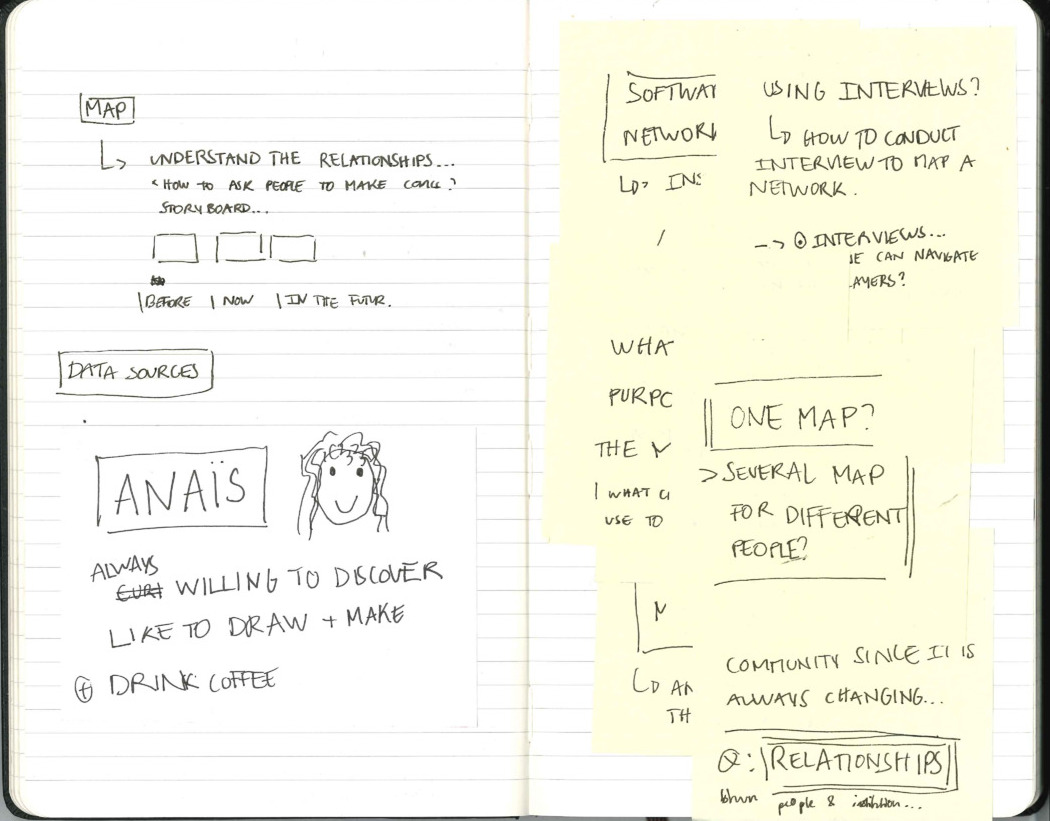
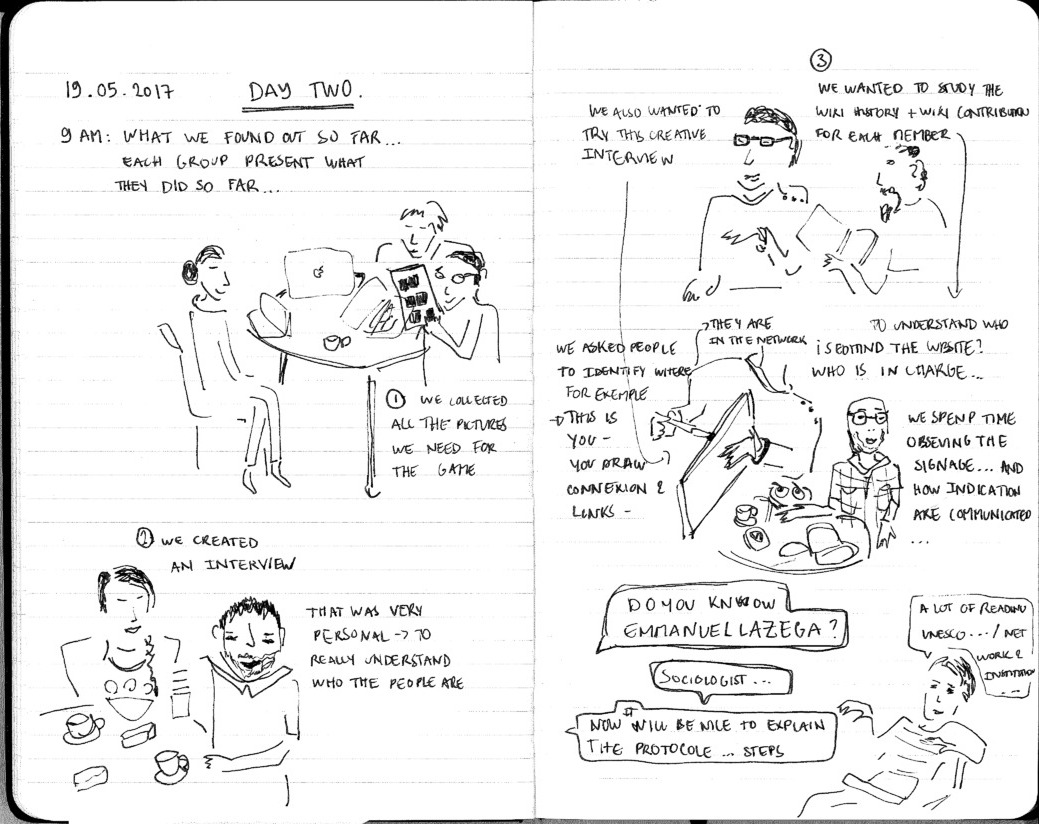
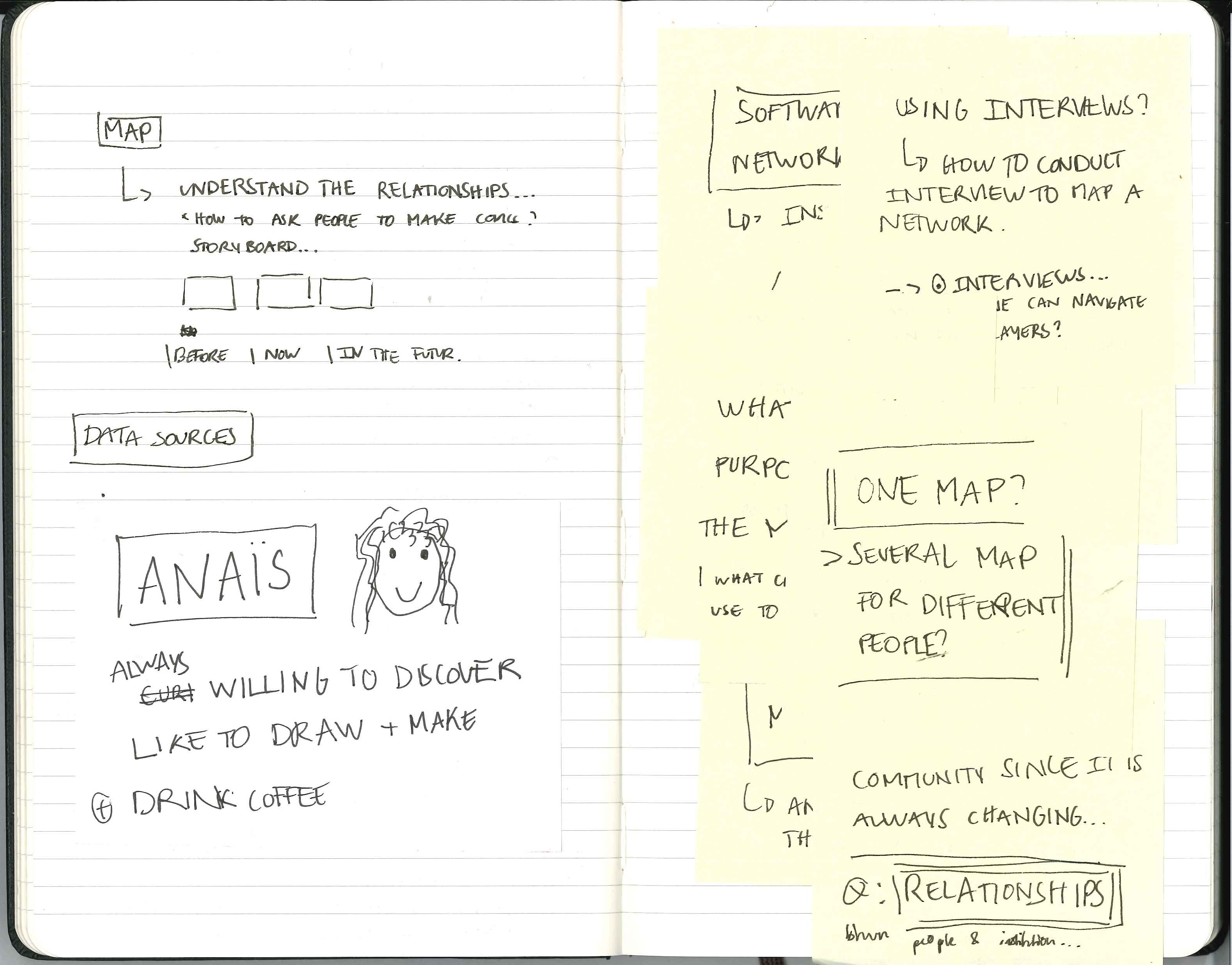
The 2 days were a complex process of common discussion, reflection and action -- notes by Anaïs Bloch (cc)
The program
The workshop started on May 17th evening by a short presentation of the project at the biohack lab Hackuarium.