Chinese Cities - Sciences Po - OGLM 3050 - 59127 - S2 2025/26 Clément Renaud [hi@clementrenaud.com](mailto:hi@clementrenaud.com) (use left/right keyboard arrows to navigate) --- class: inverse, center, middle ## Week 7 # 创 ## Planning For Innovation #### 17 Mar 2026 --- class: inverse, center, middle ## Character of the week # 创 [Purple Culture](https://www.purpleculture.net/dictionary-details/?word=创) / [Hanziyuan](https://hanziyuan.net/) / [CUHK dic](https://humanum.arts.cuhk.edu.hk/Lexis/lexi-mf/search.php?word=创) --- class: inverse, middle # Program Today ### First hour 1. **Presentation**: Song Ziqian — AI and urban policy in China 1. **Discussion**: Smart cities & AI as urban governance in China _— break —_ ### Second hour 1. **Planning**: Top-level planning & 15th year plan 1. **Case study**: Mass entrepreneurship and the maker movement 1. **Group work**: Assignment 2 / final project alignment --- class: inverse, middle, center # AI and the Smart City ### From Planning to Prediction --- class: inverse, middle # Presentation ## Song Ziqian ### AI and Urban Policy in China --- class: inverse, middle # Discussion: From the Presentation ### Questions to open - What problem is AI supposed to solve in Chinese cities? - Who decides how AI is deployed? --- # Smart City: The Concept ### 智慧城市 — _Zhìhuì chéngshì_ - Emerged globally ca. 2008–2010 (IBM "Smarter Cities" campaign) - China's Ministry of Housing and Urban-Rural Development launches **national smart city pilots** in **2012** — 90 cities in first round, 277 by 2015 - **2016**: "New Type Smart City" (新型智慧城市) absorbed into 13th Five-Year Plan ### What is being built? - Urban data platforms (城市大数据平台) - Integrated government services (一网通办 — "one network, one door") - Transport management, grid monitoring, emergency response - Population and mobility surveillance infrastructure .footnote[ Alizadeh, T. "An Investigation of IBM's Smarter Cities." *Cities* 47 (2015). Cugurullo, F. "Urban Artificial Intelligence." *Urban Planning* 5(1), 2020. ] --- # Alibaba City Brain ### 城市大脑 — Hangzhou, 2016 **Alibaba Cloud** wins contract with Hangzhou city government to build an AI-powered urban operating system. - Real-time analysis of traffic cameras, sensors, ride-hailing data - Claims: reduced emergency vehicle response time by half; traffic efficiency - Expanded to: parking management, medical queuing, COVID health codes ### City = data source / provider (city = product?) - private tech company becomes infrastructure provider - city government supplies data; Alibaba owns the platform / algorithm - exported to other countries (Malysia, etc) .footnote[ Shao. "The 'City Brain' and Algorithmic Governance in China." *Urban Studies* 59(5), 2022. ] --- # AI Policy Framework .left-column[ ## New Generation AI Development Plan (2017) ## 新一代人工智能发展规划 the most cited AI policy document globally - Issued by State Council, July 2017 - 2020: match world leading AI technology - 2025: major breakthroughs, AI as core driver of industry upgrade - 2030: China as world's primary AI innovation center ] ### Municipal AI strategies Cities racing to be "AI capitals": - Beijing — Zhongguancun, national AI pilot zone (2019) - Shanghai — AI Island, Lingang free trade zone - Shenzhen — Huawei, DJI, facial recognition supply chain - Hangzhou — Alibaba ecosystem, City Brain export model .footnote[ Ding, J. "[Deciphering China's AI Dream.](https://www.fhi.ox.ac.uk/wp-content/uploads/Deciphering_Chinas_AI-Dream.pdf)" _Future of Humanity Institute_, Oxford, 2018. ] --- # Urban Monitoring ### Deployments of urban monitoring .row[ .column[ **Surveillance** - Skynet (天网) + Sharp Eyes (雪亮工程): 500M+ cameras - Facial recognition at transit hubs, schools, residential gates - Link to population registration (户籍) and social credit systems ] .column[ **Health Governance** - COVID health codes (健康码): QR-based mobility control - Tricolour system (green/yellow/red): real-time status update - 2022: protests over misuse to restrict bank depositors (Henan) ] ] .footnote[ Liang, Fan et al. "Constructing a Data-Driven Society." _Policy & Internet_ 10(4), 2018. ] --- # Social Credit (社会信用) ### Debunking the "Black Mirror" narrative (source: China Law Translate) ## Social Credit is **NOT** a single universal citizen score. It covers three distinct systems: .row[ .column[ **1. Financial credit** - Expanding credit reporting to unbanked populations - Private firms API (unofficial credit agencies) ] .column[ **2. Regulatory blacklists** - Industry-specific lists (food safety, tax, environmental...) - Inter-agency blacklists - ex. Court "Judgment Defaulters" list (失信被执行人): restricts flights, high-speed rail ] .column[ **3. Municipal pilots** - Local point systems (e.g. [Rongcheng](https://www.chinalawtranslate.com/en/getting-rongcheng-right/)) — no punishments for low scores - Rewards = existing citizenship awards (model worker, etc.) - Educational / propaganda function, not regulatory ] ] > _"A general score just won't help you find the data you need."_ — The real concern is not a dystopian score, but additional punishments disguised as "credit consequences" and enforcement of unjust underlying laws. .footnote[ Daum, Jeremy. "[Social Credit Overview Podcast](https://www.chinalawtranslate.com/en/social-credit-overview-podcast/)." _China Law Translate_, 2018. ] --- # Discussion Prompt ### Smart city: the governing machine .col-one-half[ **Arguments for** - Efficiency gains: traffic, energy, emergency services - "Data-driven governance" replaces guanxi and informal channels - Covid response: scale and speed - Demand management in megacities of 20M+ ] .col-one-half[ **Arguments against** - Surveillance infrastructure outlasts its stated purpose - Algorithmic opacity: no appeal, no explanation - Private platform dependency (Alibaba, Huawei, Hikvision) - Reproduces and amplifies existing discrimination (hukou, ethnicity) ] > _What are other arguments? What will you set as a limit for implementation of "smart city" policies?_ --- class: inverse, middle # China's Planning System ## From Doctrine to Action --- # The Five-Year Plan System ## Central policy mechanism that defines national economic and social development priorities (since 1953) ### Based on Political Doctrine - Xi Jinping Thought ([link](https://www.airuniversity.af.edu/Portals/10/CASI/documents/Translations/2023-10-30%20ITOW%20Xi%20Jinping%20Thought%20on%20Socialism%20with%20Chinese%20Characteristics%20for%20a%20New%20Era.pdf)) (习近平新时代中国特色社会主义思想) - Socialism with Chinese characteristics (中国特色社会主义思想) - Targeted Poverty Alleviation 精准扶贫 (2014) - ecological civilization 生态文明 (2012) - etc. --- # _yeji_ (业绩) ## The culture of evaluation running deep - - Originally modeled after Soviet central planning (GosPlan) → shifted to "guidance" after 1978 - Binding targets (_yueshuxing zhibiao_) + aspirational targets (_yindaoxing mubiao_) - Complex, multi-layered: national > provincial > local; thousands of supporting sub-plans - Local implementation via performance metrics (_yeji_) — officials compete to hit targets - 14th Five-Year Plan period (2021-2025): [outline of the 14th plan](https://cset.georgetown.edu/wp-content/uploads/t0284_14th_Five_Year_Plan_EN.pdf) — [full plan](https://en.ndrc.gov.cn/policies/202203/P020220315511326748336.pdf) - 15th plan just adopted (March 12, 2026) .footnote[Supiot - _La gouvernance par les nombres_, Fayard 2015] --- # Chinese Academy of Sciences ### 中国科学院 - \#1 research institution in the world ([Nature Index](https://www.nature.com/nature-index/institution-outputs/generate/all/global/all)) - Founded November 1949, modeled on the Soviet Academy of Sciences - Large-scale technology transfer from USSR in the 1950s: equipment, training, 10,000+ scientists trained - Reformed since 1978: competitive funding, market-oriented, technology transfer to industry - In charge of devloping sciences & technology - CASS and unis takes care of policy evaluation (scientific method) --- # The 15th Five-Year Plan (2026–2030) - Just adopted in March 2026. - 20 main indicators - 109 major projects - mapping the road to "socialist modernization by 2035". ## Lets read the [plan](https://storage.ghost.io/c/e8/5b/e85b7799-d704-466e-8ceb-4f31ee39569d/content/files/2025/11/2025-Five-Year-Plan-China-20251029092118.pdf) --- # 15th FYP: 4 axes .row[ .column[ ### Technology & innovation .small[ - R&D (patents), Digital economy, - "Extraordinary measures" for breakthroughs in ICs, machine tools, basic software - Priority industries: embodied AI, quantum, biomanufacturing, 6G, commercial aviation ] ### Green & energy transition .small[ - Non-fossil energy: 25% of total consumption (vs. 21.7%) - Double "new energy" capacity; offshore wind 100GW, nuclear 110GW by 2030 - Carbon intensity: −17% over five years (new methodology incl. industrial process emissions) - "Promote peaking" of coal and oil ] ] .column[ ### Domestic consumption .small[ - RMB 100B special fund + RMB 250B ultra-long bonds - Raise minimum wages; stabilize property and stock markets - Service economy: culture, sports, etc ] ### Opening up & foreign investment .small[ - Further reduce foreign investment negative list (117 → 106 in 2025) - Expand access: telecom, biotech, healthcare, wholly foreign-owned hospitals - "Clean up regulations inconsistent with Foreign Investment Law" - Guide FDI toward advanced manufacturing, high tech, green sectors ] ] ] .footnote[ [China Briefing analysis](https://www.china-briefing.com/news/chinas-15th-five-year-plan-key-insights-for-foreign-investors/) · [Carbon Brief Q&A on climate](https://www.carbonbrief.org/qa-what-does-chinas-15th-five-year-plan-mean-for-climate-change/) · [Ambassador Xie Feng remarks](https://us.china-embassy.gov.cn/eng/dshd/202603/t20260314_11874964.htm) ] --- # Planning for Science & Technology ### S&T-specific 5y plan sections: - Quantitative targets (R&D spending, patents, publications) - Identify priority sectors and technologies for focused investment - Align resource allocation with national strategic objectives ### Long-term plans - 1956–1967: Long-term S&T plan — nuclear program (Cold War context) - [15-year science plan (2006–2020)](https://china-us.uoregon.edu/pdf/final%20print%20version.pdf): "Medium- and Long-Term Plan" — shift toward indigenous innovation --- # Science Reform: A Timeline | Period | Key shift | | ------ | --------------------------------------------------------------------------------- | | 1978 | National Science Conference — "Four Modernizations," science rehabilitated | | 1985 | Competitive funding + market-oriented reforms for research institutes | | 1995 | "Decision on Accelerating S&T Progress" — from imitation to indigenous innovation | | 2001 | WTO accession — IP rights, R&D partnerships with foreign firms | | 2006 | Medium- and Long-Term Plan: "Indigenous Innovation" (自主创新) as national goal | | 2015 | Made in China 2025: focus on tech sovereignty in strategic sectors | | 2021 | S&T system reform: funding, basic research, deepen industrial integration | | 2025 | Science and Technology Self-Reliance (科技自立自强) | --- # 15th FYP: S&T Self-Reliance ### 科技自立自强 — _kējì zìlì zìqiáng_ Self-reliance as core principle of S&T policy. Science budget: +10% to ¥426B ($62B) in 2026. .row.small[ .column[ **"Extraordinary measures"** - Six "whole chain" domains: ICs, machine tools, instruments, basic software, advanced materials, biomanufacturing - ¥500B in chip subsidies alone; breakthroughs in 3–7nm as priority ] .column[ **AI as cross-cutting lever** - "AI Plus" plan: 70% penetration by 2027, 90% by 2030 - DeepSeek (2025): frontier LLMs at fraction of US cost → confidence shift ] ] .row.small[ .column[ **Institutional machinery** - Central S&T Commission (2023): new Party-level coordination body - Beijing, Shanghai, GBA as international S&T innovation centers - K visa for foreign talent ] .column[ **The skeptic's question** - AI framed as panacea ? - "What matters is whether deployment translates into productivity gains" (MERICS) ] ] .footnote[ [Nature — "China intensifies push"](https://www.nature.com/articles/d41586-026-00814-3) · [MERICS — "China's next five-year bet on AI"](https://merics.org/en/comment/chinas-next-five-year-bet-ai-self-reliance-diffusion-and-lot-hype) ] --- class: middle, inverse # Case study ## Mass Innovation and Urban Spaces - Made in China 2025 --- background-image: url(/talks/EPFL-GoingEast/img/made-in-china-2025.jpg) class: inverse # Made in China 2025 --- # Made in China 2025 ### 中国制造2025 - Announced 2015 — response to Germany's "Industry 4.0" and US advanced manufacturing - 10 priority sectors: aerospace, semiconductors, EVs, robotics, biopharma, new energy... - Goal: move up the value chain from assembler to innovator - **"Created in China"** — not just manufactured, but designed and patented in China - Controversial: triggered US/EU concerns about forced technology transfer and subsidies ### The semiconductor question > "Innovation under pressure" — US chip export controls since 2022 have accelerated domestic investment, but also exposed the limits of indigenous innovation in cutting-edge nodes. .footnote[ [Innovation Under Pressure: China's Semiconductor Industry at a Crossroads](https://americanaffairsjournal.org/2026/02/innovation-under-pressure-chinas-semiconductor-industry-at-a-crossroads/) — American Affairs, 2026 ] --- # Spatiality: Innovation Districts ### Science parks and technology zones - [Tech and Development Zones](https://en.wikipedia.org/wiki/National_Economic_and_Technological_Development_Zones) (开发区) — [Cybergeo article](https://journals.openedition.org/cybergeo/30143?lang=es) - Zhongguancun (Beijing) — "China's Silicon Valley" - Zhangjiang Hi-Tech Park (Shanghai) - Shenzhen High-Tech Industrial Park - Suzhou Industrial Park ### Planning mechanisms - Tax incentives for high-tech enterprises - Dedicated land allocation and industrial zoning - Talent attraction policies (hukou, housing subsidies) Look at [part 8/9 of the 14th plan](https://cset.georgetown.edu/wp-content/uploads/t0284_14th_Five_Year_Plan_EN.pdf) (page ~90) for the spatial logic --- class: center, inverse # "Created in China"? ## 大众创业、万众创新 ### Mass Entrepreneurship and Innovation - [official website](https://www.gov.cn/zhengce/shuangchuangzck/index.htm) - What is China's Californian garage? - How does grassroots innovation actually happen in Chinese cities? --- # Here Comes the "Maker" > Wang, Jing. "The Makers Are Coming! China's Long Tail." In _Handbook of Cultural and Creative Industries in China_, edited by Michael Keane, 43–63. Cheltenham: Edward Elgar Publishing, 2016. ### A new heroic figure for the economy - 创客 chuangke - 黑客 heike - 双创 shuangchuang Read [article on Espaces Temps](https://www.espacestemps.net/en/articles/le-maker-construction-dune-figure-politique-de-linnovation-en-chine-urbaine/) and [summary article on Nature](https://www.nature.com/articles/s41599-022-01383-2) --- name: title class: center, inverse background-image: url(/talks/pspe/img/opimpuc-header.jpg) # Where Does Technology Emerge? ## New urban spaces to support innovators <br /> <br /> <br /> <br /> <br /> <br /> <br /> <br /> <br /> <br /> How does innovation take place? --- class: center # Makerspaces, Fablabs, etc. .col-one-half[ .small[(Bottollier-Depois, 2012)] 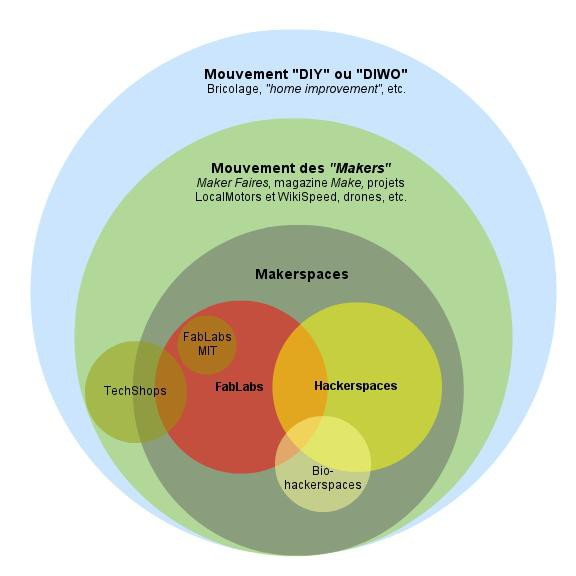 ] .col-one-half[ .small[(MoviLab, 2016)] 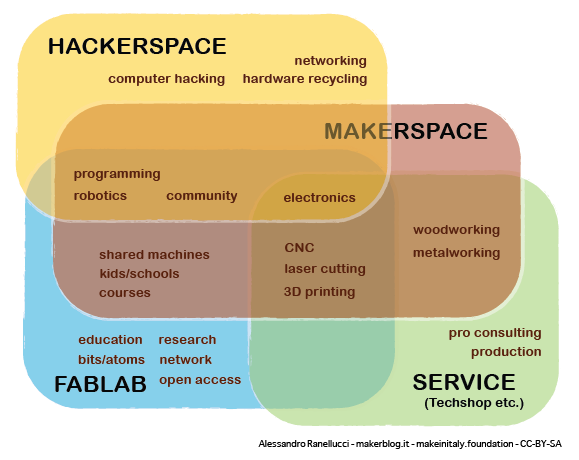 ] --- class: inverse background-image: url(/talks/EPFL-GoingEast/img/betahaus-Barcelona.jpg) # Coworking Space Beta Haus, Barcelona --- class: inverse background-image: url(/talks/EPFL-GoingEast/img/noisebridge-workshop.jpg) # Hackerspace Noisebridge, San Francisco --- class: inverse background-image: url(/talks/EPFL-GoingEast/img/articlect-toulouse.jpg) # Fablabs Artilect, Toulouse --- class: inverse background-image: url(/talks/EPFL-GoingEast/img/maker.jpg) # Third Spaces? ### Shared resources, mutualisation, learning, technology... --- class: inverse background-image: url(/talks/EPFL-GoingEast/img/LiKeqiang-Seed.png) # Mass Makerspaces ## China's Premier in Shenzhen Hackerspace --- class: inverse background-image: url(/talks/EPFL-GoingEast/img/chuangke.jpg) # 创客 chuangke: the Boom --- class: inverse, cover, middle, center # The City of Shanghai ### Evolution of (informal) tech spaces --- class: inverse, cover, middle, center background-image: url(/talks/EPFL-GoingEast/img/shanghai.jpg) # Shanghai --- class: inverse, cover, middle, center # Shanghai's Scales .col-one-half[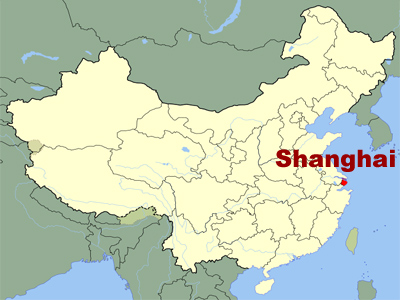] .col-one-half[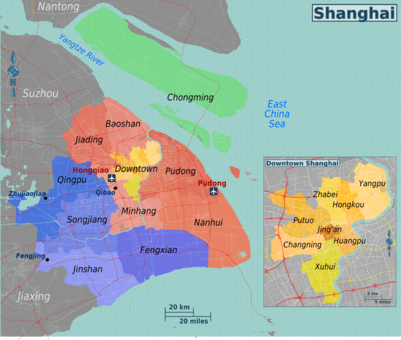] --- class: inverse background-image: url(/talks/EPFL-GoingEast/img/creativeparks.jpg) # Creative Clusters? ### 12th Shanghai Urban Plan 2006-2015 .footnote[ - CICs in Shanghai largely failed to deliver services to SMEs - Large companies have emerged (mostly state-owned) (Zhen & Chan, 2014) - No "creative class" emerged (O'Connor & Gu, 2012) - Not supporting SMEs (Rossiter, 2010) ] --- background-image: url(/talks/EPFL-GoingEast/img/xindanwei.jpg) ## Xindanwei (新单位) ### 2010-2013 (RIP) .footnote[ Shanghai, example of Xindanwei shows that what can be seen as a business failure can in fact be a total success. > Xinchejian, Xinkafe... > ] --- background-image: url(/talks/pspe/img/xcj.JPG) class: inverse ## Xinchejian (新车间) ## 2011 --- background-image: url(/talks/pspe/img/peopleSquared.jpg) class: inverse ## People Squared (联合创业办公社) ## 2011 --- background-image: url(/talks/pspe/img/innovationHouses.JPG) class: inverse ## Innovation Houses (创新屋) ## 2015 --- class: center background-image: url(/talks/EPFL-GoingEast/img/shanghai-figure.png) # Living Spaces --- background-image: url(/talks/pspe/img/banyan.jpg) class: inverse ## The Banyan Tree (榕树) ### An organic model of urban innovation .footnote.small[ Liu Yan, one of Xindanwei co-founder (新单位) ] --- class: center, middle, cover # Global Dynamics and the "Fab City" 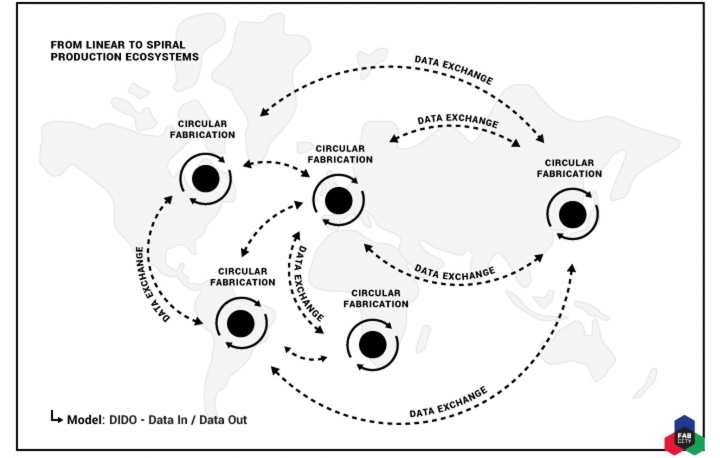 --- # What the Maker Movement Tells Us ### About innovation and urban planning 1. **Grassroots first, co-opted second**: The chuangke movement emerged from below — then Li Keqiang visited a hackerspace and it became national policy 2. **The state cannot manufacture serendipity**: Top-down "maker parks" often failed; the real spaces were informal, cheap, and accidental 3. **Short lifespans, long legacies**: Xindanwei lasted 3 years. The networks it built lasted much longer — "a business failure can be a total success" 4. **Contrast with the tech campus**: The maker space is the opposite of Alibaba's Xixi campus — permeable, fragile, cheap, unexpected 5. **Urban policy and real estate**: As rents rose in central Shanghai and Shenzhen, informal maker spaces were displaced — innovation is sensitive to urban economics ### The Californian garage question, answered China did have its garages — they just lasted 2-3 years before becoming government "innovation hubs." --- class: inverse, middle, center # Group Work ## Assignment 2: Final Project - Get into your groups - Agree on a topic / case study - What sources will you use? - One sentence: what is your argument?